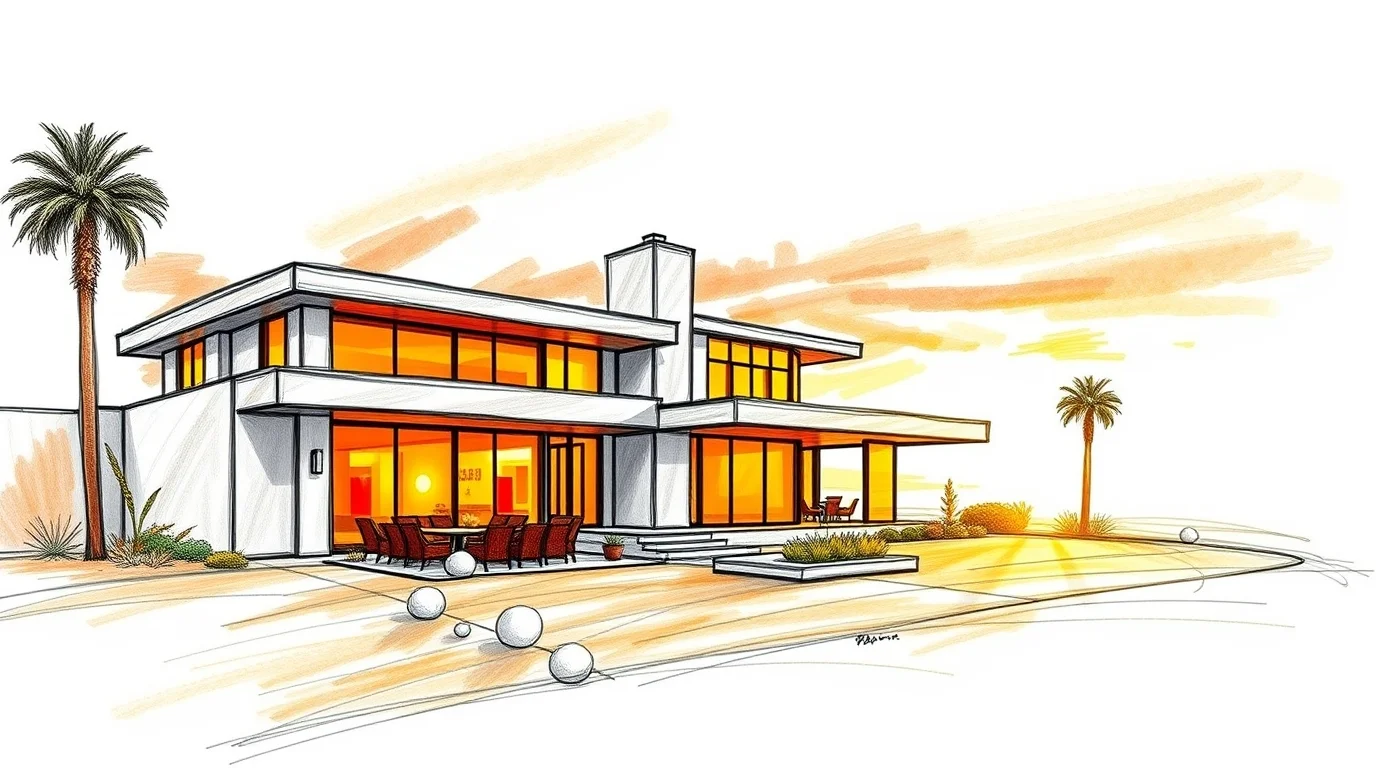
A $3M luxury property in the Hamptons will cost you roughly $60,000–$90,000 per year in property taxes alone. The same $3M spent in Cabo San Lucas will cost you $3,000–$6,000 per year in predial (Mexico's property tax) — a difference of $55,000–$85,000 annually before we even talk about appreciation or yield. This is the number that makes investors stop scrolling and start reading. The full ROI comparison between Cabo and comparable US luxury markets is more compelling than most buyers expect.
Appreciation: The Headline Number
Los Cabos luxury real estate has averaged 18–22% annual appreciation from 2020 through 2024 in the premium estate segment. By comparison:
- The Hamptons: Peaked 2021–2022, now moderating at 4–8% annually as the pandemic premium deflates
- Malibu / Pacific Palisades: 6–10% annually, with significant insurance market disruption post-wildfire events
- Aspen: 8–12% annually, still strong but at a price entry point ($8M–$25M for comparable product) that limits buyer pool
- Palm Beach: 10–14% annually, one of the stronger US luxury markets but increasingly supply-constrained at the ultra-luxury tier
The structural drivers of Cabo's outperformance — coastal supply constraints, dollar denomination, improving international accessibility, growing HNWI buyer base — are not temporary. While 20%+ appreciation will not continue in perpetuity, an 8-year average that triples the Hamptons' returns is a durable thesis, not a fluke.
Rental Yield: Where Cabo Wins Decisively
The gross rental yield gap between Cabo and comparable US markets is startling. For a well-positioned 4-bedroom luxury villa:
- Los Cabos (Corridor/Cabo San Lucas): Gross yield 8–14%, net yield after management and operating costs 5–9%
- Hamptons ($3M oceanfront): Gross yield 2–4%, net yield 1–2.5% after property tax alone
- Aspen ($4M ski-in/ski-out): Gross yield 3–5% (seasonal limitations), net yield 1.5–3%
- Malibu ($3M ocean view): Gross yield 1.5–3%, net yield often negative after taxes, insurance, and management
The Cabo yield advantage is driven by three factors: low property taxes, high nightly rates from international rental demand, and a year-round season that runs 10–11 months effectively (with only September as a genuine slow period).
Price Per Square Foot: Entry Point Comparison
Cabo is still meaningfully cheaper per square foot than its US luxury market equivalents — which means more room for appreciation and better yield on capital invested:
- Los Cabos ultra-luxury finished estates: $600–$1,100/sqft USD
- Malibu oceanfront: $1,200–$2,500/sqft
- Hamptons oceanfront: $1,400–$3,000/sqft
- Aspen ski-in/ski-out: $2,000–$4,500/sqft
- Palm Beach oceanfront: $1,500–$3,500/sqft
For the same $5M capital budget, you can acquire a 5,000–7,000 sqft custom Cabo estate with ocean views, infinity pool, and premium finishes — or a 1,500–2,500 sqft property in the Hamptons or Malibu. The experiential and investment case for Cabo is evident in those numbers.
Tax Treatment: The Often-Ignored Advantage
Mexican property tax (predial) is assessed at 0.1–0.3% of an assessed value that lags market value significantly. On a $3M market-value property, predial is typically $3,000–$8,000/year. Compare to New Jersey property taxes on a $3M Hamptons property ($45,000–$90,000/year) or Colorado property taxes on a $4M Aspen home ($25,000–$50,000/year).
For US citizens, rental income from Mexico is reportable on your US federal return, but deductible expenses (management fees, repairs, depreciation, interest on any financing, trust maintenance fees) work the same way as for domestic rental properties. Mexico also withholds 25% ISR on gross rental income paid to foreign beneficiaries unless you elect to file as a tax resident and deduct expenses — your Mexican accountant and US CPA need to coordinate on which approach is optimal for your specific situation.
Currency Considerations
Because Los Cabos real estate is priced and transacted in USD, there is no currency risk on property values. Rental income collected in USD is repatriated in USD. The peso's historical volatility — significant over multi-decade periods — is simply not relevant to your investment thesis. This distinguishes Cabo from virtually every other international luxury real estate market, where local currency fluctuations can erode USD returns even when local prices are rising.
Frequently Asked Questions
Mexico's predial is dramatically lower than US property taxes — typically 10–20x lower on comparable-value properties. A $3M Cabo estate pays $3,000–$8,000/year in predial. The equivalent property in New York, New Jersey, California, or Colorado would pay $30,000–$90,000/year. This tax differential alone covers the full annual cost of the fideicomiso trust, property management fees, and routine maintenance. It is the single most powerful cost-of-ownership advantage Cabo holds over US luxury markets.
Rental income earned in Mexico by a US citizen is fully repatriable to the US. There are no capital controls or repatriation restrictions on wire transfers from Mexican rental management accounts to US bank accounts. The income is subject to US income tax (reported on Schedule E for rental properties), with a foreign tax credit available for any Mexican ISR withheld. Your US CPA handles the filing; your Mexican accountant handles local compliance. Wire transfers of rental distributions are routine and typically processed within 3–5 business days.
For Cabo real estate specifically, peso risk is minimal. Property prices, rental rates, and sale proceeds are all USD-denominated. Construction contracts for premium projects are USD-denominated. Your fideicomiso maintenance fee is USD-denominated. The only meaningful peso exposure is local operating costs — utilities, labor, routine maintenance — which represent a small fraction of total cost of ownership and actually benefit from peso weakness (lower USD cost when the peso depreciates). Peso volatility is a meaningful risk in peso-denominated Mexican assets; it is largely irrelevant in the Los Cabos luxury estate market.