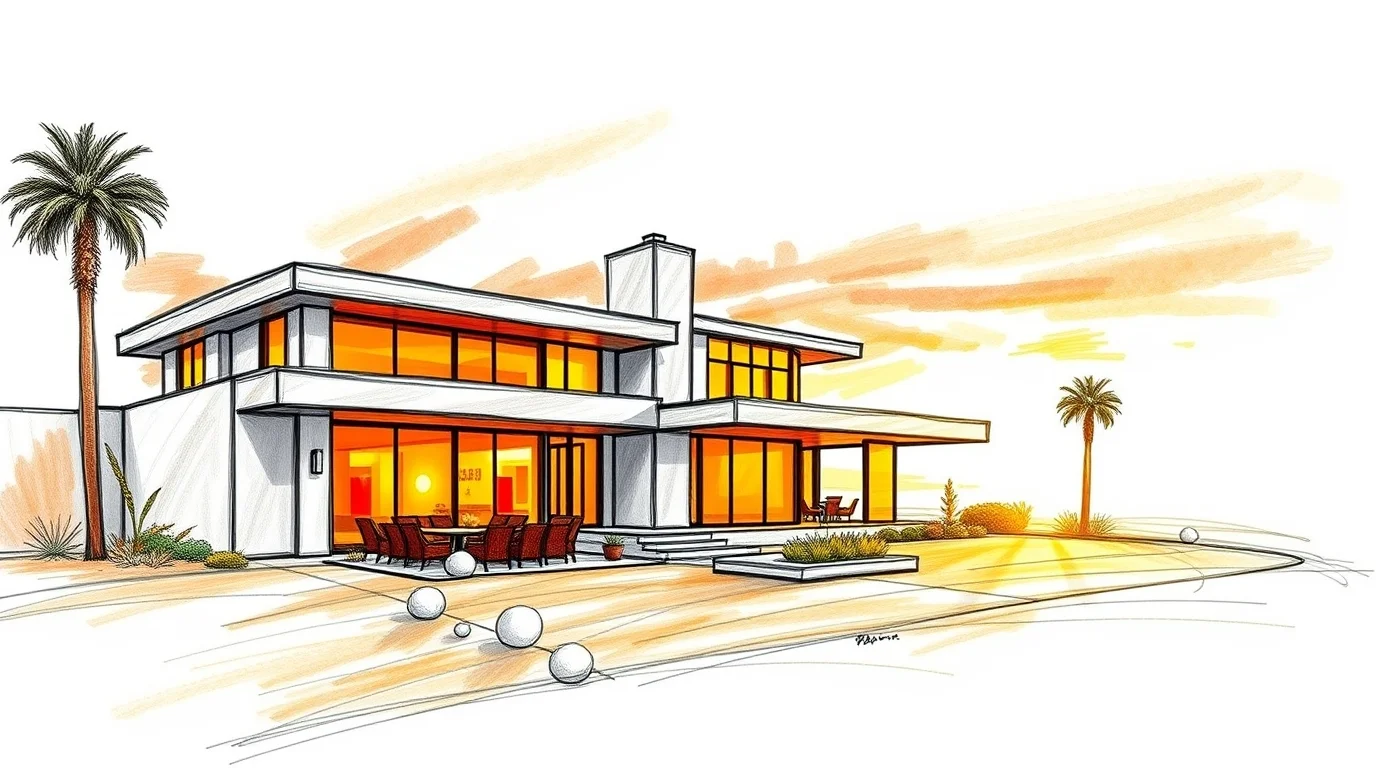
Sustainability in luxury construction is frequently a marketing exercise — a solar panel here, a recycled-content countertop there, a press release about water conservation. That is not what we do. At Barker Development, green building is a competitive advantage built into every project specification, because it lowers long-term operating costs, commands a documented resale premium, and — not incidentally — is the right way to build in a desert ecosystem as extraordinary as Baja California Sur. Here is exactly what we do and why it matters.
Solar: 80–100% Energy Offset on Every Estate
Every Barker Development estate is specified with an Enphase microinverter solar system as standard — not an upgrade, not an option. The system is sized to the estate's projected electrical load during normal occupancy and to the site's solar resource, which in Los Cabos is among the finest on the planet: 340+ days of direct sunshine and average peak sun hours of 6.2 per day.
A typical 7,000–10,000 sqft Barker estate runs 24–36 Enphase IQ8 panels with microinverters on every panel. Key performance parameters:
- Annual energy offset: 80–100% of electrical consumption under normal occupancy, including HVAC, pool pump, water heating, lighting, and appliances
- System cost: $45,000–$75,000 installed, included in Barker Development's base specification
- Annual savings: $8,000–$14,000 in CFE electrical costs avoided, depending on estate size and occupancy pattern
- System life: 25-year Enphase performance warranty; microinverter architecture means a single panel failure does not affect system output
- Integration: All systems include Enphase Enlighten monitoring accessible via phone app — owners and property managers can view real-time and historical generation data remotely
Rainwater Harvesting: 50,000-Liter Cisterns
Water is Baja California Sur's most precious resource. The peninsula receives 7–9 inches of annual rainfall — almost entirely in brief summer storms. Capturing and storing that water, rather than allowing it to run off into arroyos, is both ecologically sensible and practically valuable.
Barker Development installs 50,000-liter underground reinforced concrete cisterns on all new projects. The system works as follows:
- Roof and terrace drainage is channeled through first-flush diverters (which bypass the first 30 seconds of rainfall to remove dust and debris) into the cistern
- The stored water passes through sediment filtration before use
- Primary use is landscape irrigation, which on a typical Barker estate eliminates 100% of municipal water demand for grounds maintenance — a meaningful cost saving given Los Cabos municipal water pricing
- On request, the system can be upgraded with UV sterilization and reverse osmosis treatment to achieve potable-grade output
A 50,000-liter cistern holds approximately 6–8 weeks of landscape irrigation supply at typical Baja estate maintenance rates. Combined with native desert landscaping (which requires essentially no irrigation after year 2), the cistern effectively eliminates ongoing irrigation water costs entirely.
Native Desert Landscaping: Zero Irrigation After Year Two
The single most underrated sustainability feature in Baja luxury construction is native landscaping — and it is also one of the most aesthetically powerful choices available. Baja California Sur's endemic plant palette is extraordinary: towering cardon cacti, the world's largest cactus species, reaching 30–50 feet over decades; flowing agave in silver-blue; the incandescent orange and fuchsia of bougainvillea cascading over volcanic stone walls; feather grass catching the ocean breeze.
"Every buyer who has walked through a mature native-landscaped Barker estate has said the same thing: it does not look like a desert at all. It looks like the most dramatic garden they have ever seen. And they have never watered it." — Barker Development landscape director
The practical case for native landscaping is equally compelling:
- Water consumption: Near zero after establishment (typically 18–24 months with initial irrigation support)
- Annual maintenance cost: 60–70% lower than equivalent square footage of tropical or turf landscaping requiring regular mowing, fertilizing, and irrigation
- Hurricane resistance: Native desert species have deep root systems and flexible structures that withstand high winds far better than imported tropical trees
- Local material sourcing: All plant material is sourced from Baja California Sur nurseries, supporting local horticultural businesses and eliminating quarantine compliance costs for imported species
Local Materials and Construction Waste Management
The embodied carbon in construction materials — the energy consumed in manufacturing and transporting materials — is one of the largest contributors to a building's lifetime environmental impact. Barker Development's materials specification prioritizes sources within 500km of the construction site wherever quality standards allow.
Our primary locally sourced materials:
- Volcanic stone: Sourced from quarries in Baja California and Sonora. Used for exterior cladding, retaining walls, landscape features, and interior accent surfaces. Zero transport emissions for stone that would otherwise ship from Europe or Asia.
- Adobe and clay brick: Traditional Baja construction materials with exceptional thermal mass properties. Manufactured within 300km of Los Cabos.
- Hardwood: Structural and decorative hardwood sourced from certified sustainable forestry operations in Jalisco and Michoacán — within 1,200km, significantly closer than imported teak or mahogany from Southeast Asia.
On construction waste: a conventional luxury build in Los Cabos sends approximately 60–70% of its construction waste to landfill. Barker Development achieves 75% diversion from landfill through a combination of material separation on-site, concrete recycling agreements with local aggregate processors, wood waste composting, and metal scrap recovery. This is not a nominal commitment — it requires active waste management planning from the first day of demolition through final punch-list.
Thermal Mass and Passive Cooling
The most elegant sustainability feature of a Barker Development estate is one that visitors rarely notice because it simply works: the thermal mass wall system. Adobe and clay brick walls at 12–18 inches thickness absorb heat during the day and release it slowly overnight — moderating interior temperatures passively without mechanical assistance.
Combined with deep roof overhangs (sized to block the summer sun angle while admitting winter sun), cross-ventilation design (prevailing ocean breezes channeled through the estate from inlet to outlet apertures), and R-30+ spray foam insulation in all roof assemblies, Barker estates require dramatically less active cooling than comparable estates built with conventional 6-inch stud-and-drywall construction.
The result: HVAC systems sized 20–30% smaller than industry standard for the same square footage, lower equipment cost, lower operating cost, and longer equipment life from reduced duty cycles.
The business case for green building at this tier is straightforward: it costs 8–12% more to build and returns 18–22% more at resale. The environmental case requires no financial justification — building responsibly in a desert ecosystem of extraordinary beauty is simply what we owe the place. Speak with our team about how these specifications translate into a project at your budget, or see our 2025 year in review for the geothermal cooling innovation we introduced on Villa Obsidian.
Frequently Asked Questions
Our green building specifications add approximately 8–12% to construction cost versus conventional luxury builds at the same finish level. Our resale data shows a consistent 18–22% premium for green-specified Barker estates versus non-green comparables — meaning the cost premium is recovered more than twice over at exit, plus annual operating savings during ownership.
A standard 24–36 panel Enphase microinverter system on a Barker Development estate offsets 80–100% of annual electrical consumption under normal occupancy. Los Cabos receives 340+ days of direct sun and 6.2 average peak sun hours per day — among the best solar resources on the planet. Excess generation can be credited against utility bills under CFE net metering.
Barker Development installs 50,000-liter underground reinforced concrete cisterns on all new projects. Primary use is landscape irrigation. On request, a UV filtration and reverse osmosis treatment system brings harvested water to potable standard. The full potable-grade upgrade adds approximately $18,000–$25,000 to the cistern installation.
Native Baja landscaping in skilled hands is dramatic, not sparse. Mature cardon cacti at 30+ feet, flowering agave, cascading bougainvillea, feather grass, and grey-white palo blanco trunks against volcanic stone walls. By year 2–3, established native landscapes are visually rich and architecturally compelling — with zero irrigation demand and 60–70% lower annual maintenance costs than tropical alternatives.