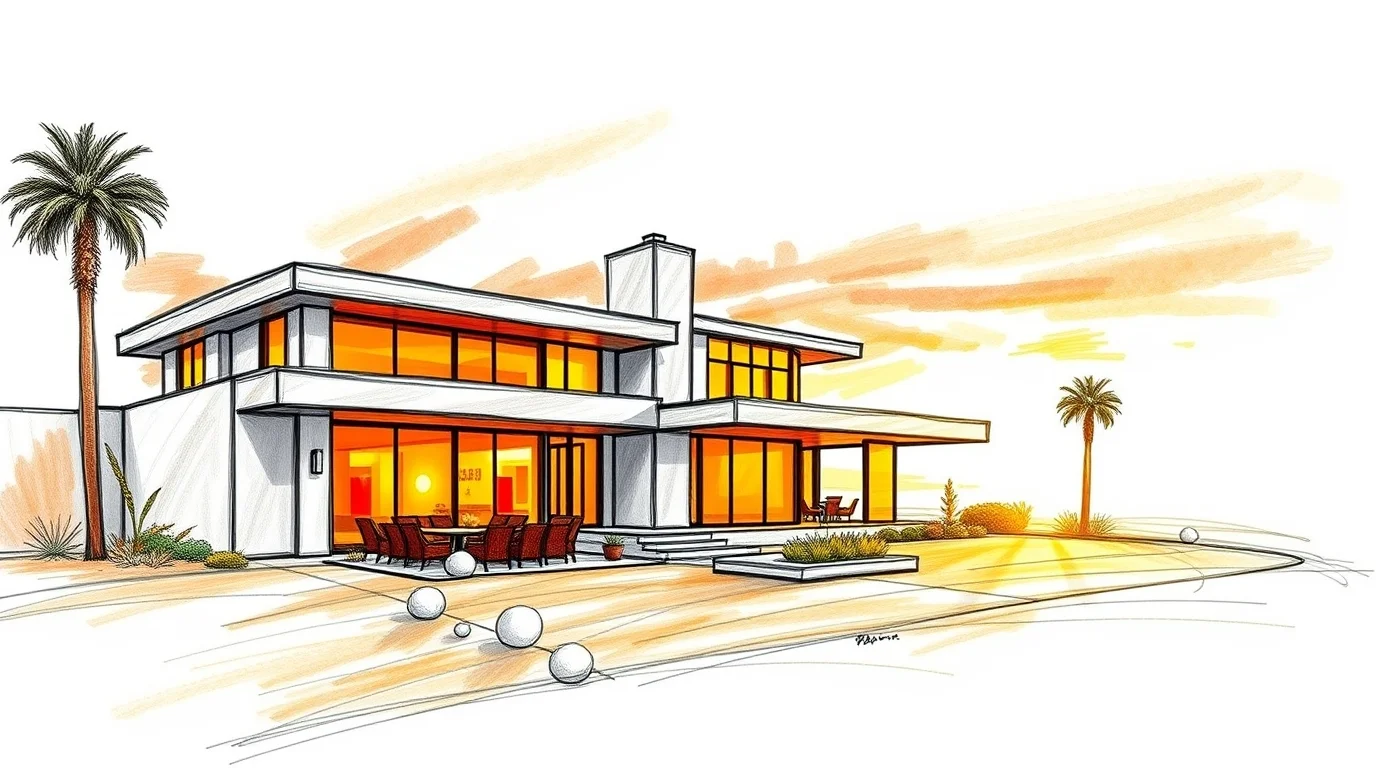
There is a pattern that repeats itself in luxury real estate: the buyers who build the most wealth are never the ones who bought at the peak of the market everyone is talking about. They are the ones who identified the next market three to five years before the headlines arrived. In Baja California Sur, that market is Loreto — and the window for buying ahead of the curve is narrowing faster than most people realize.
Loreto: The Original Capital of the Californias
Loreto is not a new discovery — it is the oldest permanent settlement on the Baja California peninsula, established in 1697 by Jesuit missionaries as the first capital of the Californias. Its Misión de Nuestra Señora de Loreto, still standing and actively used today, is the mother church of the entire California mission system that extends north through San Francisco.
The town sits on the Sea of Cortez approximately 350 kilometers north of Cabo San Lucas, flanked by the dramatic Sierra de la Giganta mountain range to the west and the Loreto Bay National Marine Park — a UNESCO-designated World Heritage biosphere reserve — to the east. The bay encompasses five islands (Isla del Carmen, Isla Coronado, Isla Danzante, Isla Monserrat, and Isla Santa Catalina), creating a protected marine environment with world-class snorkeling, diving, kayaking, and sport fishing.
Population: approximately 20,000. International airport (LTO) with direct service from Los Angeles, Phoenix, and Calgary. Climate: nearly identical to Cabo — 340+ days of sunshine, rain measured in weeks per year, not months.
The Value Case: 2–3x Cheaper Than Cabo
The numbers are stark. Premium beachfront and sea-view lots in Loreto currently trade at $80–$250/sqm, compared to $400–$1,200/sqm for comparable positions in Los Cabos. A finished luxury villa that would cost $3M–$5M to build and sell in the Cabo Corridor can be delivered in Loreto for $1.2M–$2.5M total investment — including lot acquisition.
This is not a quality-of-life discount. The geography is arguably more dramatic than Cabo — the island-studded bay, the mountain backdrop, the pristine marine park. The difference is purely in the stage of development of the two markets. Cabo 25 years ago looked like Loreto looks today.
The Fonatur Master Plan: Institutional Validation
Fonatur — Mexico's national tourism development fund, the same institution that developed Cancún, Huatulco, and Ixtapa from scratch — has an active master plan for Loreto Bay. The plan calls for a fully integrated resort development including an expanded international marina, luxury hotel zone, golf courses, and residential communities with projected capacity for 40,000+ residents and visitors.
Loreto Bay, the primary Fonatur project area, has already seen significant infrastructure investment: a new marina with 180+ slips, road improvements connecting the marina district to the airport and town center, and utility upgrades. The development pace has been slower than originally projected — Fonatur projects always are — but the infrastructure foundation is in place. Unlike speculative micro-markets with no institutional backing, Loreto has a sovereign-level commitment to development already partially executed.
Air Access and the Connectivity Premium
Loreto International Airport (LTO) currently serves direct routes from Los Angeles (Alaska Airlines), Phoenix (American Airlines), and Calgary (WestJet) with seasonal expansions that have added routes from other Western US cities in recent years. The airport's runway can accommodate wide-body aircraft, and expansion planning is underway.
The flight from Los Angeles to Loreto is 2 hours — faster than driving from LAX to Palm Springs on a bad traffic day. For the California buyer base that drives so much of Baja's premium real estate demand, Loreto is entirely accessible. The current flight network is what the Los Cabos network looked like in 2005; the trajectory is predictable.
What to Buy and Where
The most defensible positions in the Loreto market:
- Loreto Bay Marina District: The Fonatur-developed zone north of the historic center. Beachfront and marina-view lots with the best infrastructure and most transparent title. Best for buyers prioritizing development timeline certainty.
- Nopoló beach corridor: The original international resort zone, site of the existing Camino Real hotel. Wide flat beach, mild surf, family-friendly. Some of the best lot values per meter in the BCS premium market.
- Puerto Escondido: 25km south of Loreto town, a world-class natural harbor with a Fonatur-built marina — the deepest protected anchorage on the Baja peninsula. Preferred by the sailing and cruising community; land values here are genuinely undiscovered.
Frequently Asked Questions
Loreto consistently ranks among the safest municipalities in all of Mexico, with violent crime rates comparable to small US resort towns. The US State Department places Loreto in the same safety tier as Los Cabos — both classified as "exercise normal precautions," the mildest advisory level. The town has a strong expat community, active fishing and sailing visitor traffic, and none of the cartel-related security concerns that affect some other Mexican states. Safety is not a meaningful concern for buyers and residents.
Yes — direct service operates from Los Angeles (Alaska Airlines), Phoenix (American Airlines), and Calgary (WestJet) with seasonal additions from other US cities. The Los Angeles flight is approximately 2 hours. For buyers based in other US cities, a single connection through Los Angeles, Phoenix, or Dallas typically produces a total travel time of 4–5 hours — comparable to flying to the Hamptons from Chicago or to Aspen from New York. The flight network is expanding as the market grows.
Loreto is a real Mexican town with functional infrastructure — paved roads, reliable CFE electricity, municipal water, internet service (fiber available in the marina district and town center), and a small but well-equipped regional hospital. It does not have Cabo's level of restaurant and nightlife density, luxury retail, or international medical facilities. Buyers choosing Loreto are choosing a quieter, more authentically Mexican environment at a dramatically lower price point — and accepting that some of the amenities that Cabo has taken 30 years to build are still 10–15 years away. For early investors, that gap is where the return lives.